


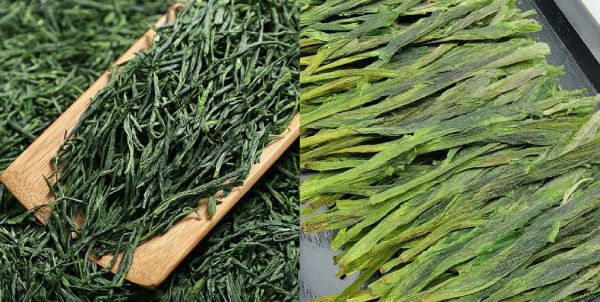
When you think of green tea, what comes to mind? For many, it’s a single, uniform flavor. But in the vast world of chinese green tea types, nothing could be further from the truth. The diversity in shape, aroma, and taste is immense. To showcase this, we are putting two legendary teas head-to-head in this Xinyang Maojian vs Taiping Houkui guide. One is a tiny, brisk “fur tip,” the other a giant, serene “monkey chief.”
Not All Green Teas Are Alike: Xinyang Maojian vs. Taiping Houkui
Prepare to have your perception of green tea expanded. Xinyang Maojian and Taiping Houkui are both among China’s most famous green teas, yet they are polar opposites in almost every way. By comparing these two titans, we will explore the incredible range that premium green tea has to offer. This is your guide to understanding the profound diversity within a single category of tea.
The Appearance: A Tale of Two Shapes
The most striking difference between these two teas is visible before you even add water. Their appearance tells a story of their unique origins and craft.
Xinyang Maojian: Tiny, Needle-Like “Fur Tips”
Xinyang Maojian translates to “fur tips from Xinyang.” The name is a perfect description. The dry leaves are tiny, straight, and needle-like, covered in a delicate white downy fur. This “fur” is a sign of a high-quality, early-spring harvest, indicating the leaves are young, tender, and full of flavor.
Taiping Houkui: Large, Flat, and Press-Pressed “Monkey Chief”
In stark contrast, Taiping Houkui leaves are enormous. The name means “monkey chief from Taiping,” a nod to a local legend. Its leaves are famously long and flat, sometimes up to 6-7 cm. During processing, they are pressed between mesh screens, creating a unique crisscross pattern on the surface. It is unlike any other tea in the world.
The Craft: How Processing Creates Different Characters
While both are green teas, subtle differences in their crafting lead to their vastly different flavor profiles.
The Pan-Firing of Xinyang Maojian for a Nutty Aroma
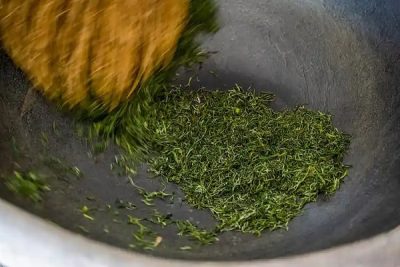
Xinyang Maojian is processed using the traditional method of pan-firing. The fresh leaves are heated in a large wok to halt oxidation. This process not only preserves their green color but also imparts a characteristic toasty or nutty aroma, reminiscent of toasted chestnuts.
The Unique Shaping Process of Taiping Houkui
How is Taiping Houkui made so unique? After the initial heating, the leaves are carefully laid out and gently pressed between layers of cloth and mesh. This meticulous, low-temperature shaping process avoids breaking the leaf, which results in a brew that is exceptionally smooth and lacks the astringency that can come from more aggressively processed leaves.
The Flavor Profile: Chestnut vs. Orchid
Now for the most important part: the taste. Their different shapes and crafts create two completely distinct flavor experiences.
The Taste of Xinyang Maojian: Brisk, Nutty, and Vegetal
What does Xinyang Maojian taste like? It is a classic example of a northern Chinese green tea. The flavor is brisk, bold, and invigorating. You’ll find a strong, pleasant vegetal note, like steamed greens, underpinned by that signature toasty, nutty flavor from the pan-firing. The aftertaste is long-lasting and refreshing.
The Taste of Taiping Houkui: Smooth, Mellow, with a Lingering Orchid Note
Taiping Houkui offers a completely different flavor profile. It is incredibly smooth, mellow, and gentle, with almost no bitterness. Its most famous characteristic is a unique and lingering floral fragrance known as hou yun, or “monkey rhyme.” This distinct orchid note is its signature, making it one of the most elegant and serene green teas.
Brewing Guide: Getting the Best from Each Leaf
To experience these teas at their best, a slightly different approach is needed for each.
Brewing Xinyang Maojian: Lower Temperature, Shorter Steeps
Because its leaves are so small and tender, Xinyang Maojian brews quickly. Use a lower water temperature (around 80°C / 175°F) to avoid scorching the leaves. Start with short infusions of 30-45 seconds. This method will highlight its nutty aroma and brisk flavor without extracting too much bitterness.
Brewing Taiping Houkui: Use a Tall Glass to Watch the Leaves Dance
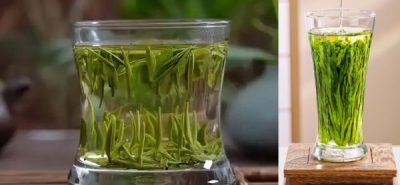
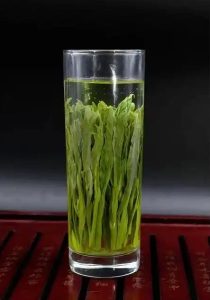
The best way to brew Taiping Houkui is in a tall, clear glass. This allows you to watch the giant leaves gracefully stand upright and “dance” in the water. Use slightly hotter water (around 85°C / 185°F) and a longer infusion time (2-3 minutes) to allow the large leaves to fully release their smooth, floral essence.
Conclusion: Which Green Tea Path Will You Choose?
The comparison between Xinyang Maojian and Taiping Houkui beautifully illustrates that “green tea” is not a single flavor. It is a vast and diverse world. Do you prefer the bold, nutty, and invigorating path of Maojian, or the smooth, elegant, and serene path of Houkui? There is no wrong answer—only an exciting journey of discovery.
Drawn to the brisk, nutty character of a classic tribute tea? . Fascinated by the smooth, elegant orchid notes of the ‘Monkey Chief’? .
FAQ: Your Chinese Green Tea Questions Answered
Are these teas better than Japanese green tea?
They are not better, but different. Many Japanese green teas (like Sencha or Gyokuro) are steamed, which gives them a distinct savory, umami, or “seaweed” flavor. Most Chinese green teas, like these two, are pan-fired, resulting in a toastier, nuttier, or more floral flavor profile. It is a matter of personal preference.
Why is Taiping Houkui so much larger than other green teas?
Why is Taiping Houkui so large? It is made from a specific, large-leaf tea cultivar called Shi Da Cha, which naturally produces much larger leaves than most other tea bushes. The unique processing method is also designed to keep these large leaves perfectly intact.
What is the best way to store premium green tea?
To preserve its freshness, premium green tea should be stored in an airtight, opaque container away from light, heat, and strong odors. For long-term storage, keeping it in the refrigerator is an excellent option to lock in its vibrant flavor and aroma.
Where can I buy authentic, famous Chinese green teas?
To buy green tea of this quality, it’s crucial to find a specialized vendor who knows the tea’s specific origin and harvest season. At , we source authentic, top-grade famous chinese green teas like Xinyang Maojian and Taiping Houkui directly from their historic terroirs.