

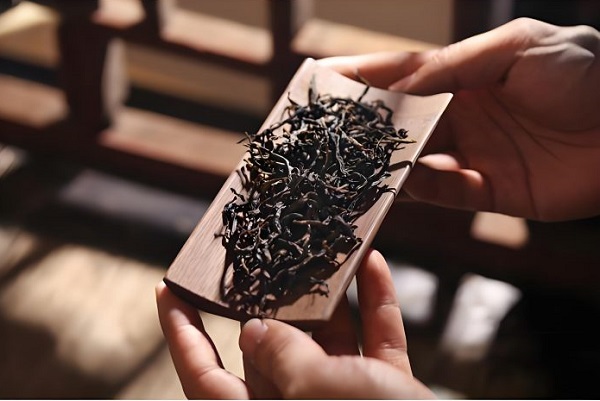
When you first encounter Phoenix Oolong Tea, you’re met with a world of incredible aromas. One might smell exactly like honey and orchids, another like almonds, and yet another like ginger blossoms. This leads to a natural question: are these flavors added? The magical answer is no. The secret lies in a special name: Dancong Oolong. This guide will explain what does dancong mean and how it unlocks one of the most fascinating stories in the world of tea.
The Story of a Single Bush: Unlocking the Secrets of Dancong
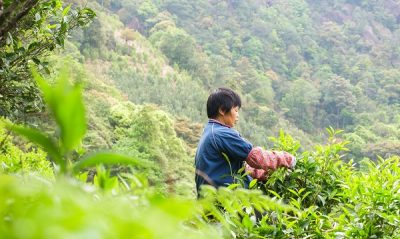
The term Dancong Oolong refers to a unique category of oolong teas from the Phoenix Mountains (Fenghuang Shan) in Guangdong, China. These teas are famous for their ability to mimic a wide range of natural scents. This isn’t an accident or an artificial process; it is a legacy passed down from individual tea trees. Understanding the concept of single bush oolong is the key to appreciating the true genius of this tea.
Deconstructing the Name: What Does “Dan Cong” Actually Mean?
The name itself is a perfect description of the tea’s philosophy. Let’s break it down.
“Dan” (单): Single, Individual
The character “Dan” (单) in Mandarin means single, one, or individual. It emphasizes uniqueness and singularity.
“Cong” (丛): Bush or Tree
The character “Cong” (丛) refers to a bush or a cluster of trees. In this context, it means a tea tree.
The Meaning: Tea from a Single, Individual Bush
When you put them together, Dan Cong (单丛) literally translates to “single bush.” This means that traditionally, a true Dancong tea was harvested from one single, specific tea tree. While today it often refers to a batch of tea harvested from a grove of genetically identical trees, the principle remains: it represents a pure, unblended flavor profile from a single origin.
The “Mother Tree” Philosophy: A Legacy in Every Leaf
The concept of “single bush” is rooted in a deep respect for the individual character of each tea tree.
The Origin of a Fragrance Type
Long ago, tea farmers on Phoenix Mountain discovered that certain ancient tea trees produced a very distinct and remarkable aroma. One tree might have a strong gardenia scent, while its neighbor might smell of honey. They designated these unique trees as “mother trees” for that specific fragrance type.
Preserving a Unique Genetic Profile
To preserve these incredible aromas, farmers would take cuttings from the mother tree and plant them, creating groves of genetically identical offspring. This ensures that the unique fragrance profile is passed down through generations. So, when you drink a Honey Orchid Fragrance Dancong, you are tasting the legacy of the original Honey Orchid mother tree.
A Symphony of Scents: Exploring the Famous Dancong Aromas
The Dancong world is a library of natural fragrances. Each “fragrance type” is a different cultivar. Here are a few famous examples you will find in our shop:
Mi Lan Xiang (Honey Orchid Fragrance)
This is one of the most popular and beloved Dancong varieties. It has a distinctive sweet, floral aroma reminiscent of orchids and a rich, honey-like aftertaste.
Ya Shi Xiang (“Duck-Choosen” Fragrance)
Despite its strange name (born from a legend of a farmer trying to hide his amazing tea), this tea has a beautiful, clean, and bright gardenia-like floral fragrance.
Ba Xian (Eight Immortals)
A legendary and often more intense Dancong, Ba Xian is known for its powerful, layered aroma that can combine floral, fruity, and even spicy notes with a very full body.
Song Zhong (Song Dynasty Cultivar)
This refers to a cultivar descended from a tree believed to have survived from the Song Dynasty. Song Zhong teas are prized for their deep, complex character, often with earthy and woody undertones beneath their floral scent.
How to Brew Dancong Oolong to Capture Its Famous Aroma
Properly brewing Dancong is all about one thing: capturing that magnificent, fleeting aroma.
Use a Gaiwan to Appreciate the Scent
A porcelain Gaiwan is the ideal vessel. Its wide opening makes it easy to smell the leaves, and the lid is the perfect tool for trapping and savoring the “lid aroma” (gai xiang) after each infusion.
Quick Infusions with Slightly Cooler Water (90-95°C)
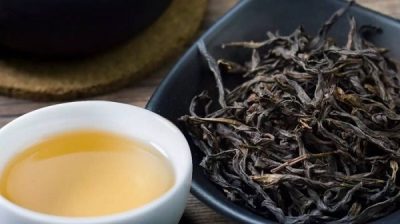
To avoid cooking away the delicate aromatics, use water that is just below boiling. The infusions should be very quick, especially the first few—start with just 5-10 seconds. This method highlights the bright fragrance and prevents any bitterness from developing.
More Than a Name, It’s a Pedigree
So, what is Dancong Oolong? It is more than just a name; it is a pedigree. It certifies that the tea in your cup has a pure lineage, a direct connection to a unique mother tree and its signature fragrance. It is a celebration of natural diversity and masterful craft. Exploring the world of Dancong is like walking through a garden of scent, with each cup offering a new and enchanting flower.
Every Dancong tells the unique story of its parent tree. Ready to explore this incredible family of fragrances? .
FAQ: Your Dancong Oolong Questions Answered
Is the flavor added to Dancong oolong?
Absolutely not. This is the most important thing to understand. The incredible floral and fruity aromas are 100% natural, produced by the specific genetics of that tea cultivar. The tea master’s skill is in preserving and highlighting this inherent fragrance, not adding to it.
What is the main difference between Dancong and Wuyi Rock Oolong?
The main difference is in their core character. Dancong Oolong is all about capturing a high, vibrant, and specific aroma. Wuyi Rock Oolong is about tasting a deep, mineral-rich texture and feeling, known as “rock rhyme” (yan yun), which comes from its rocky soil and charcoal roasting.
Why are some Dancong teas named after strange things?
Many names come from local legends or the history of the tea. The famous “Duck-Choosen Fragrance” (Ya Shi Xiang) got its name because the original farmer, wanting to protect his discovery, told everyone it was grown in less-than-ideal “duck poop soil” to ward off thieves!
Where can I buy authentic Phoenix Dancong Oolong?
You should buy oolong tea from a specialist vendor who can tell you the specific fragrance type, origin, and harvest information. At , we source our Phoenix Oolong Tea