


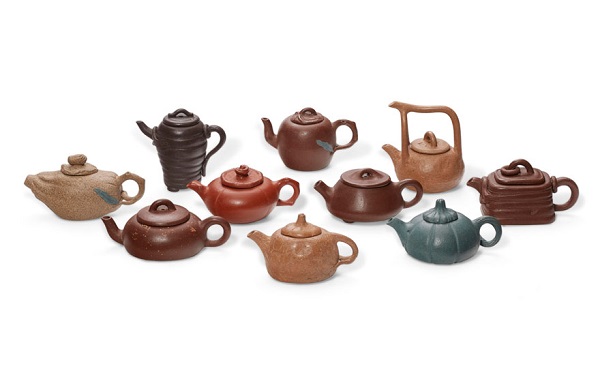
The market for Yixing teapots is vast and, unfortunately, filled with fakes and low-quality imitations. For a new buyer, it can feel like navigating a minefield. So, how can you tell if a Yixing teapot is real? While true mastery takes years, you don’t need to be an expert to protect yourself. This guide will teach you how to identify yixing teapot quality by focusing on 5 key signs, empowering you to choose an authentic, handmade clay teapot.
Is Your Yixing Teapot Real? A Guide to Spotting a Fake
You’re ready to invest in a beautiful piece of chinese tea ware, but the fear of buying a fake yixing teapot is holding you back. This is a valid concern. The good news is that by training your senses and knowing what to look for in a yixing teapot, you can significantly reduce your risk. This guide will give you a practical checklist to assess a pot’s authenticity and craftsmanship.
Sign 1: The Look and Feel of Authentic Yixing Clay
Your first clues come from the material itself. Authentic yixing clay quality has a unique texture and appearance that is difficult to replicate perfectly.
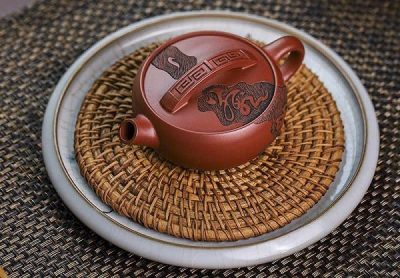
Look for a Natural, Slightly Sandy Texture
A real Yixing pot should have a subtle, slightly sandy or gritty texture. It should feel smooth but not slick, with a deep, matte luster rather than a high gloss. It feels organic and earthy in your hands.
Avoid Pots That Are Overly Shiny or Perfectly Smooth
Many low-quality pots are made from ordinary clay mixed with chemicals and are then highly polished to look attractive. If a pot has a glassy, reflective shine or feels perfectly smooth like polished plastic, be cautious. This is often a sign of a machine-made imitation.
Sign 2: The Hallmarks of a Handmade Clay Teapot
The difference between a handmade vs machine made teapot lies in the subtle imperfections that prove human touch.
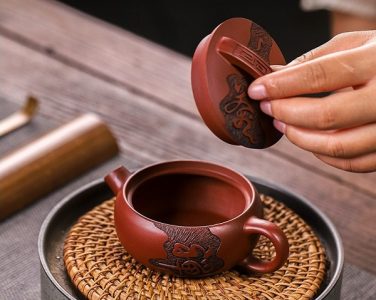
Subtle Tool Marks on the Inside
Look inside the teapot. In a handmade clay teapot, you will often see faint, concentric lines or tool marks left by the artist’s fingers and bamboo tools as they shaped the clay from the inside. A machine-made pot will typically be perfectly smooth and uniform inside.
Natural Variations vs. Machine-Made Uniformity
A handmade pot is unique. There will be slight, natural variations in its form. It possesses a certain character or “spirit.” A machine-made pot, by contrast, will look and feel perfectly symmetrical and uniform, often lacking the life and soul of a handcrafted piece.
Sign 3: The Precision of the Lid Fit
The lid fit is one of the most reliable tests of a pot’s craftsmanship and a key part of any yixing teapot test.
The “Wiggle Test”: It Should Be Snug, Not Loose
Place the lid on the pot and give it a gentle wiggle. On a high-quality pot, there should be very little movement. The lid should feel snug and secure. A loose, rattling lid is often a sign of poor craftsmanship or a machine-made product.
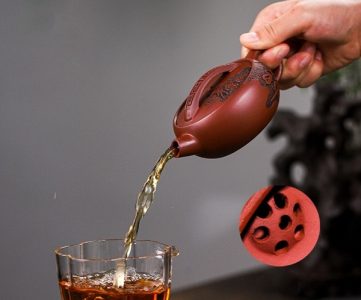
The “Airtight Test”: Covering the Spout to Stop the Pour
For a well-made pot, the lid fit is so precise that it creates a near-perfect seal. You can test this by filling the pot with water, then covering the hole in the lid’s knob with your finger and tilting it to pour. The water flow from the spout should slow to a trickle or stop completely.
Sign 4: The Clarity of the Artist’s Seal
The seal on the bottom of the pot is the artist’s signature. Its quality can tell you a lot.
A Clear, Well-Defined Stamp, Not a Blurry Mess
The yixing artist seals on an authentic pot are typically clear and well-defined. You should be able to make out the individual strokes of the Chinese characters. A blurry, messy, or poorly impressed seal can be a red flag for a fake or a low-quality piece.
Checking the Seal’s Style and Placement
The seal should be placed in the center and be level. While it’s difficult for a beginner to know every artist’s seal, you can look for consistency. The style of the seal should match the overall style and quality of the pot.
Sign 5: The “Water Test” for Porosity
This simple test reveals the unique breathing quality of real Yixing clay.
How a Real Pot “Drinks” Water
Pour some warm water over the lid or body of the pot. A real Yixing pot, with its excellent porosity, will absorb the water quickly. You’ll see the color of the clay darken where the water touches it, as if the pot is “drinking” the water.
Watching the Water Mark Appear and Disappear
After the pot “drinks” the water, watch the dark water mark. It should disappear relatively quickly and evenly as the pot dries. A pot made from inferior, non-porous clay will have water bead up and run off its surface without being absorbed.
Buy with Confidence, Brew with Joy
Learning to identify yixing teapot authenticity is a rewarding skill. By using these five key signs—examining the clay, looking for handmade marks, testing the lid, checking the seal, and observing its porosity—you can arm yourself against fakes. However, the ultimate sign of confidence is buying from a trusted source.
The easiest way to ensure authenticity is to buy from a source you trust. At Wings Tea Shop, we guarantee every handmade clay teapot is sourced directly from skilled artisans. .
FAQ: Your Yixing Teapot Authenticity Questions Answered
Does a high price guarantee an authentic Yixing teapot?
No. While authentic, high-quality pots are never cheap, a high price tag alone is not a guarantee of a real yixing teapot. Unfortunately, some sellers put high prices on fakes to deceive buyers. It’s more important to rely on the physical signs of quality and the reputation of the seller.
What about the “certificate” that comes with the pot?
Many authentic pots from contemporary artists do come with a certificate. However, these are very easy to fake. You should treat a certificate as a supplementary item, not as the primary proof of authenticity. The quality of the pot itself is always the most important evidence.
Can I test the sound by tapping the lid?
Yes, this is a common test. A pot made from high-quality, high-fired Zisha clay should produce a clear, high-pitched, almost metallic sound when you gently tap the lid against the body. A dull, low-pitched thud can indicate a lower-quality clay.
What is the most important sign to look for if I’m a beginner?
What is the most important sign for a beginner? Focus on the lid fit (Sign #3) and the water test (Sign #5). These are two simple, physical tests that are very difficult for fakes to replicate. A snug lid and a pot that “drinks” water are two of the strongest indicators of authentic yixing clay quality