


Wuyi Oolong Tea, you will inevitably encounter a mysterious and revered term: Yan Yun (岩韵). Translated as “Rock Rhyme” or “Rock Essence,” it is the soul of this unique tea. But what is Yan Yun? It’s more than just a flavor. It is a complex sensation, a feeling, and a direct expression of the tea’s unique origin. This guide will help you understand and, most importantly, taste the famous Wuyi Rock Rhyme.
What is Yan Yun? Unlocking the Soul of Wuyi Oolong Tea
If you’ve ever had a truly exceptional Wuyi Oolong Tea, you may have noticed a special quality that sets it apart. It’s a feeling of depth, a long-lasting finish, and a mineral-like character that seems to coat your throat. That is Yan Yun. It is the signature of authentic Wuyi “rock tea,” a mark of quality that connoisseurs seek. Learning the art of tasting oolong for this specific quality will elevate your entire appreciation of this tea.
The Source of Rock Rhyme: The Wuyi Mountains Terroir
The secret of Yan Yun is not a processing technique; it is a gift from the earth. It is born from the unique terroir of the Wuyi Mountains in Fujian, China.
The Danxia Cliffs and Mineral-Rich Soil
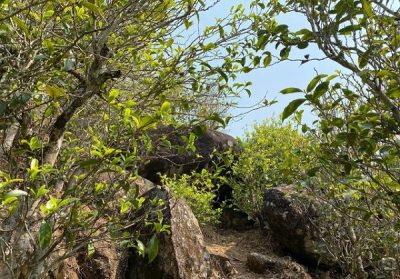
The Wuyi Mountains are a UNESCO World Heritage site, famous for their dramatic, reddish-brown Danxia cliffs. For centuries, these cliffs have weathered, creating a rocky, mineral-rich soil. The tea bushes here do not grow in neat rows but in the cracks and crevices between these ancient rocks.
How the Tea Plant Absorbs the “Taste of the Rocks”
The roots of the tea plants dig deep into this unique soil, absorbing the rich mineral content. This “taste of the rocks” is then expressed in the leaves. The specific mineral composition of the Wuyi terroir is what gives the tea its underlying foundation, which is then skillfully brought out by the tea master during processing.
Deconstructing Yan Yun: What Are You Actually Tasting?
What does Wuyi Rock Rhyme mean? It can be hard to describe, but we can deconstruct it into three main sensory components. Look for these next time you’re tasting a what is rock tea.
Component 1: The Minerality (A Wet Stone Sensation)
This is the most direct component. It’s a clean, pleasant taste reminiscent of the smell of wet stones or a cool, mountain spring. It’s not a “dirt” taste, but a pure, clean mineral note that provides the backbone for the tea’s wuyi oolong flavor profile.
Component 2: The Texture (A Thick, Smooth Mouthfeel)
Yan Yun has a distinct physical presence. The tea liquor should feel thick, smooth, and viscous in your mouth. It coats your tongue and throat with a satisfying, full-bodied texture that is both powerful and incredibly smooth.
Component 3: The Aftertaste (A Long, Resonant Finish)
This is perhaps the most important part. A tea with strong Wuyi Rock Rhyme will have a very long and resonant finish. Long after you’ve swallowed, you can still feel the sensation and taste the lingering sweetness and mineral notes in your throat. This enduring “rhyme” is the mark of a truly great rock oolong.
How to Experience Yan Yun: A Tasting Guide
Here are a few tips on how to taste wuyi oolong specifically for its rock rhyme.
Use a Yixing Teapot to Enhance Texture
A porous Yixing clay teapot is the perfect partner for Wuyi oolongs. The clay helps to round out any sharp edges and enhances the tea’s thick, smooth mouthfeel, making the textural component of Yan Yun even more apparent.

Pay Attention to the Feeling in Your Throat
Don’t just focus on the taste on your tongue. After you swallow, pay close attention to the sensation in your throat. Do you feel a warming, coating, and lingering presence? That is the essence of the rhyme.
Notice the “Hui Gan” (Returning Sweetness)
A key part of Yan Yun is a powerful Hui Gan, or “returning sweetness.” After the initial roasty and mineral notes, a deep and satisfying sweetness should emerge from the back of your throat, a beautiful contrast that adds to the complexity.
Zhengyan vs. Banyan: The Different Levels of Rock Rhyme
Not all Wuyi oolongs have the same level of rock rhyme. The location where it’s grown is critical.
“Zhengyan”: The Core Production Area with the Strongest Yan Yun
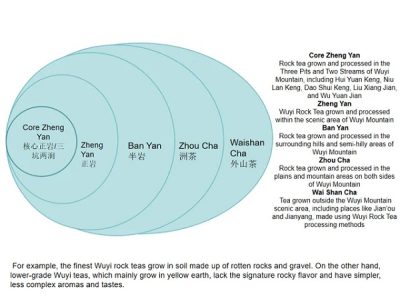
Zhengyan (正岩) means “True/Core Rock.” These are the teas grown within the official Wuyi scenic area, in the rockiest, most mineral-rich soil. Zhengyan teas are prized for having the most intense, complex, and long-lasting Yan Yun. They represent the pinnacle of Wuyi oolong.
“Banyan”: The Surrounding Area with a Softer Rhyme
Banyan (半岩) means “Half Rock.” These teas are grown on the periphery of the core area, in soil with less rock content. While still high-quality, their Wuyi Rock Rhyme is typically softer, less intense, and may not last as long as a Zhengyan tea.
Conclusion: More Than a Flavor, It’s a Feeling
Yan Yun is the ultimate expression of terroir in tea. It is a beautiful, complex sensation that combines taste, texture, and a long-lasting aftertaste. It is what makes Wuyi Oolong Tea one of the most revered and fascinating teas in the world. It is more than just a flavor; it is the feeling of the Wuyi mountains themselves, captured in your cup.
The only way to truly understand Yan Yun is to taste it. Are you ready to taste the rocks? .
FAQ: Your Wuyi Rock Rhyme Questions Answered
Can any oolong tea have “rock rhyme”?
No. Wuyi Rock Rhyme is exclusive to oolong teas grown in the specific terroir of the Wuyi Mountains. While other regions may produce teas with a “mineral” character, the unique combination of factors that creates true Yan Yun is found only in Wuyi.
Does the roasting level affect the Yan Yun?
Yes. A skilled tea master uses the roast to “awaken” and express the Yan Yun that is latent in the leaves. A very light roast may not fully develop it, while a very heavy roast can overpower it. A medium, well-executed roast is often best for showcasing a balanced and beautiful rock rhyme.
Is a stronger Yan Yun always better?
Not necessarily. While a strong and long-lasting Yan Yun is a sign of a high-quality tea from a core production area, personal preference matters. Some people may prefer the softer, more approachable rhyme of a Banyan tea. The key is balance between the roast, the tea’s natural aroma, and the rock rhyme.
Which Wuyi oolong is best for experiencing Yan Yun?
While many cultivars express it, Da Hong Pao and Rou Gui are famous for their powerful Yan Yun. To experience it in its purest form, choosing a tea specifically labeled as Zhengyan