

Have you ever spent good money on a premium green tea, only to brew a cup that tastes overwhelmingly bitter? Or steeped a delicate white tea, only to find it watery and flavorless? The problem might not be the tea, but the water temperature. Mastering the correct tea brewing temperature is a fundamental skill in any gongfu brewing guide and the easiest way to elevate your tea experience.
Stop Burning Your Tea! The Ultimate Water Temperature Guide
One of the most common mistakes in tea brewing is using the same temperature for all teas—usually, fully boiling water. This is like cooking a delicate fish and a thick steak at the same high heat; one will be perfect, and the other will be ruined. This ultimate water temperature guide will show you how to stop “burning” your delicate teas and unlock the perfect flavor from every single leaf.
The Science of Extraction: Why Temperature Matters
How does temperature affect taste? It’s all about chemistry. Tea leaves contain thousands of compounds, but for simplicity, let’s focus on two key types.
How Heat Affects Catechins (Bitterness) vs. Amino Acids (Sweetness)
-
Amino Acids (like L-theanine): These are responsible for the sweet, savory (umami), and brothy flavors in tea. They dissolve at lower temperatures.
-
Catechins and Polyphenols: These are responsible for the brisk, astringent, and sometimes bitter notes. They dissolve much more readily at higher temperatures.
Finding the “Sweet Spot” for a Balanced Brew
The goal of brewing is to find the temperature “sweet spot” that extracts plenty of the sweet amino acids without extracting too many of the bitter catechins. This balance is what creates a delicious, complex, and enjoyable cup. Using the wrong temperature throws this balance completely off.
A Quick Temperature Guide for Every Type of Chinese Tea
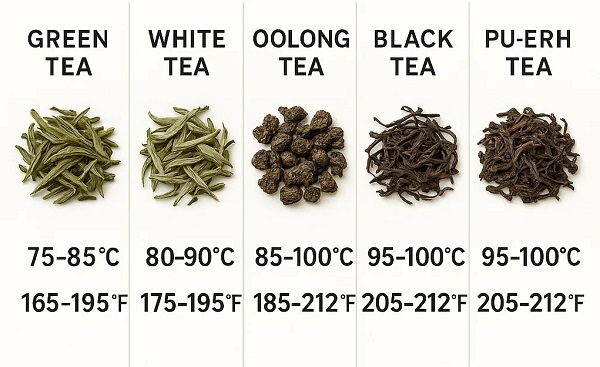
Here is a simple chart for the ideal tea brewing temperature for each major tea category.
Green & Yellow Teas: Cool Down (75-85°C / 165-185°F)
This is the most critical one to get right. Delicate green and yellow teas are high in amino acids and easily scorched. Using water that’s too hot is the number one reason they taste bitter. The best water temperature for green tea is well below boiling.
White Teas: Gentle Heat (80-90°C / 175-195°F)
White tea is also delicate, but its leaves are less processed and release flavor more slowly. It can handle slightly warmer water than green tea, which helps to extract its subtle, fruity, and honey-like notes.
Oolong Teas: Varies by Type (85-100°C / 185-212°F)
The ideal what temperature for oolong tea depends on its style.
-
Light, “Green” Oolongs: Use a lower temperature (85-95°C / 185-205°F) to protect their floral aromas.
-
Dark, Roasted Oolongs: Use full boiling water (100°C / 212°F) to penetrate the roasted leaves and extract their deep, mineral notes.
Black & Puerh Teas: Full Heat (95-100°C / 205-212°F)
These robust teas need high heat to fully extract their rich, deep flavors. Don’t be shy; using fully boiling water is almost always the right choice for black and puerh teas to get a full-bodied brew.
What Happens When You Use the Wrong Water Temperature?
Understanding the consequences can help reinforce the importance of this step.
Too Hot: The Danger of a Bitter, Astringent Brew
When you use water that is too hot for a delicate tea (like pouring boiling water on a green tea), you instantly scald the leaves. This over-extracts the tannins and catechins, resulting in a cup that is harsh, bitter, and astringent, masking all the delicate sweetness.
Too Cold: The Risk of a Weak, Flavorless Infusion
If you use water that is too cool for a robust tea (like brewing a black tea at 80°C), you won’t extract enough of the flavor compounds. The result will be a weak, watery, and uninspired brew that doesn’t represent the tea’s true potential.
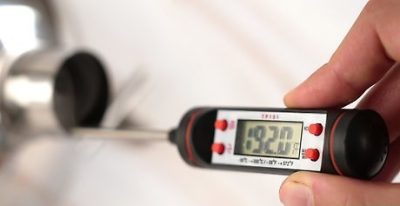
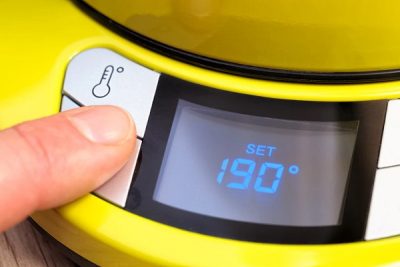
How to Control Water Temperature Without a Special Kettle
You don’t need an expensive variable temperature kettle to get started. Here are two simple methods.
The “Wait Method”: How Long to Let Boiling Water Cool
Boil your water, then simply let it cool. As a rough guide:
-
Wait 1-2 minutes for black/dark oolong temperatures.
-
Wait 3-5 minutes for white/light oolong temperatures.
-
Wait 5-8 minutes for green/yellow tea temperatures.
The “Mixing Method”: Adding a Splash of Cold Water
A quicker method is to pour your boiling water into a pitcher or mug first. Then, add a splash of cold, room-temperature water to it. This will instantly bring the temperature down. The more cold water you add, the lower the final temperature will be.
The Easiest Way to Improve Your Brew
Of all the brewing tips, mastering water temperature is the single easiest and most impactful change you can make to improve the taste of your tea. It costs nothing, requires only a little bit of attention, and the results are immediate. By respecting the delicate nature of each tea type, you unlock its true flavor and ensure a perfect cup, every time.
The difference is night and day. Try brewing your favorite tea with the correct water temperature and taste the improvement for yourself. .
FAQ: Your Water Temperature Questions Answered
Should I always use boiling water for the first rinse?
No. The rinse should generally be done at or near the same temperature you plan to use for the first infusion. Rinsing a delicate green tea with boiling water can shock and damage the leaves before you even begin brewing.
Does the ideal temperature change for later infusions?
Yes, often it does. For many teas, especially oolongs, you can gradually increase the water temperature for later infusions (e.g., from 95°C to 100°C). This helps to extract the deeper, more stubborn flavor compounds as the leaves get tired.
Can I “save” a tea that I brewed with water that was too hot?
Unfortunately, it’s very difficult. Once the leaves are scalded and the bitter compounds are released, that character will dominate subsequent infusions. The best solution is to use the remaining dry leaves and start over with cooler water.
Where can I find a good variable temperature kettle?