

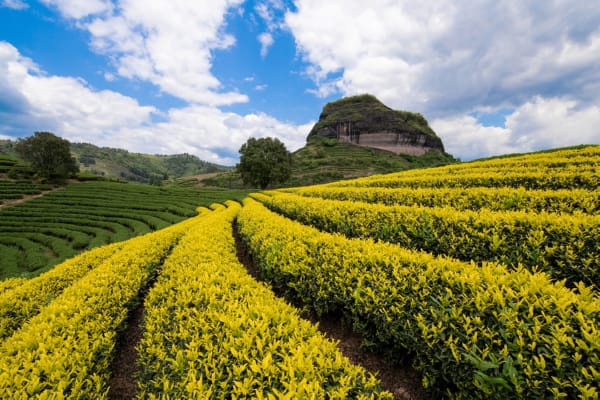
To truly understand a Wuyi Rock Oolong, you must first understand the place where it is born. The Wuyi Mountains tea region is not just a location; it is the primary ingredient in the tea itself. This guide is a virtual journey to this legendary landscape, exploring the unique Wuyi terroir that gives rock oolong its soul and its famous “rock rhyme.”
Journey to the Source: Exploring the Wuyi Mountains Tea Terroir
Where does Wuyi rock tea come from? It hails from a dramatic and beautiful landscape in the northern part of Fujian province, China. The connection between the tea and its environment here is so profound that the tea is often described as tasting of the very rocks it grows in. Let’s journey to the source to understand this unique relationship.
A UNESCO World Heritage Site: The Danxia Landscape
The Wuyi Mountains are so unique, they have been designated a UNESCO World Heritage site for their cultural, scenic, and biodiversity values.
The Red Cliffs and Winding Rivers
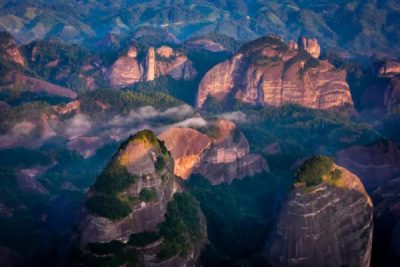
The area is famous for its stunning Danxia landscape, characterized by steep, reddish-brown cliffs of sandstone and conglomerate rock. A beautiful river, the “Nine Bend Creek,” winds its way through these towering cliffs, creating a breathtaking panorama.
A Microclimate of Mist and Humidity
This dramatic landscape creates its own microclimate. Mist and fog are common, shrouding the mountains and providing the tea plants with diffuse sunlight. High humidity and a significant temperature difference between day and night create ideal conditions for the tea leaves to develop complex aromatic compounds.
The Heart of the Matter: The “Zhengyan” Tea Area
Within the Wuyi Mountains, not all areas are created equal. The most prized teas come from the core production zone, known as the Zhengyan tea area.
What Defines the Core “Zhengyan” Production Zone?
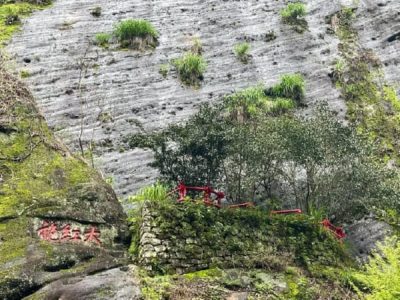
Zhengyan (正岩) literally means “True Rock” or “Core Rock.” What is Zhengyan? It refers to a specific, protected area within the Wuyi scenic reserve. Teas grown here are rooted in the rocky, mineral-rich soil of the weathered Danxia cliffs. Teas grown on the periphery, in more soil-heavy areas, are called Banyan (半岩), or “Half Rock.”
Why the Mineral-Rich Soil is Key to “Rock Rhyme” (Yan Yun)
The soil in the Zhengyan area is what gives the tea its soul. It is a gravelly, purple-brown soil, rich in minerals. The tea bushes struggle to grow in this harsh environment, sending their roots deep into the rock crevices. This struggle allows them to absorb the unique mineral content, which is then expressed in the finished tea as the famous rock rhyme, or Yan Yun.
The Legendary “Three Pits and Two Ravines” (San Keng Liang Jian)
Within the already exclusive Zhengyan tea area, there is an even more revered “core of the core.” This area is known to connoisseurs as San Keng Liang Jian (三坑两涧), the “Three Pits and Two Ravines.”
“Hui Yuan Keng,” “Niu Lan Keng,” and “Dao Shui Keng” (The Three Pits)
These three “pits” (keng) are valleys known for their exceptional microclimates and rocky soil, producing some of the most powerful and complex rock oolongs. Niu Lan Keng, the “Cow Pen Pit,” is arguably the most famous of all.
“Wu Yuan Jian” and “Liu Xiang Jian” (The Two Ravines)
These two ravines (jian) are equally prized, known for producing teas with incredible aromatic profiles and a profound mineral character.
Why Teas from Here are the Most Sought-After
Teas from San Keng Liang Jian are the pinnacle of Wuyi Rock Oolong. The combination of perfect soil, ideal microclimate, and traditional cultivars results in a tea with the strongest and most enduring Yan Yun. They are incredibly rare and command the highest prices.
The Teas Born from the Rocks
This unique terroir is the birthplace of several famous tea cultivars, each expressing the rock rhyme in its own way.
The Powerful Rou Gui (Cinnamon)
Rou Gui is famous for its sharp, spicy cinnamon aroma, which is beautifully balanced by the deep, mineral texture of the rock rhyme.
The Elegant Shui Xian (Narcissus)
Shui Xian is known for its more elegant, floral aroma and a thick, smooth mouthfeel that showcases the rock rhyme in a gentler way.
The Balanced Da Hong Pao (Big Red Robe)
The most famous rock oolong of all, Da Hong Pao is a masterful blend known for its balance of floral aroma, roasty notes, and a profound, lingering rock rhyme.
Tasting the Soul of the Mountain
To drink a true Wuyi Mountains tea is to take a sensory journey. It is an opportunity to taste a unique geological wonder—a UNESCO World Heritage site—in your cup. The famous “rock rhyme” is more than just a flavor; it is the very soul of the mountain, a testament to the power and beauty of tea terroir.
You may not be able to visit the Wuyi cliffs in person, but you can taste their essence in every cup. .
FAQ: Your Wuyi Mountains Questions Answered
What’s the difference between Zhengyan (core rock) and Banyan (half rock) tea?
The main difference is the intensity of the “rock rhyme” (Yan Yun). Zhengyan teas, from the core rocky area, have a stronger, more complex, and longer-lasting mineral character. Banyan teas, from the surrounding areas, are still high-quality, but their rock rhyme is generally softer and less pronounced.
Can I visit the Wuyi Mountains tea gardens?
Yes, the Wuyi Mountains scenic area is a popular tourist destination. While many of the core tea gardens, especially in the “pits and ravines,” are protected and not accessible to the general public, you can hike through the beautiful landscape and see the tea bushes growing in their stunning natural environment.
Why is tea from the “pits and ravines” so expensive?
It comes down to extreme scarcity. The production area of San Keng Liang Jian is tiny, and the yields are very low. This, combined with the exceptional quality and high demand from connoisseurs, makes these teas some of the most expensive oolongs in the world.
Where can I buy tea that is genuinely from the Zhengyan area?
You must buy from a trusted, specialist vendor who has direct relationships with farmers in the Wuyi Mountains and is transparent about their sourcing. At , we pride ourselves on offering authentic Zhengyan tea area