


When you step into the fascinating world of Puerh tea, you are immediately met with a fundamental choice: Sheng or Shu? These two categories, often translated as Raw and Ripe, represent two completely different paths of fermentation, flavor, and experience. This guide will provide a complete comparison of Sheng vs. Shu Puerh, demystifying the most important concept in the Puerh universe.
Raw or Ripe? The Ultimate Showdown of Sheng vs. Shu Puerh
What is the difference between Raw and Ripe Puerh? This is the single most important question for any Puerh drinker to understand. They are not just slightly different styles; they are two distinct worlds of taste, texture, and aroma, born from the same raw material but shaped by vastly different processes. This ultimate showdown will compare them across the board, from how they are made to how they age.
The Defining Difference: The Fermentation Process
The entire difference between Sheng and Shu Puerh comes down to one key factor: the method of puerh fermentation.
Sheng (Raw) Puerh: Slow, Natural, Air-Dried Fermentation
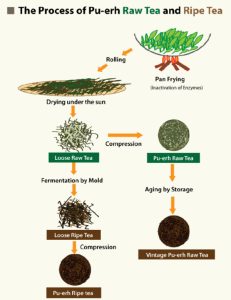
What is Sheng Puerh? Sheng Puerh is the traditional, original form. After the leaves are harvested, pan-fired to halt enzymatic oxidation (like green tea), rolled, and sun-dried, they are often compressed into cakes. From this point on, their fermentation is a slow, natural process that occurs over many years through exposure to the air’s microbes.
Shu (Ripe) Puerh: Accelerated, Wet-Pile “Wo Dui” Fermentation
What is Shu Puerh? Developed in the 1970s, Shu Puerh undergoes an accelerated post-fermentation process called Wo Dui (渥堆). The sun-dried leaves are piled up, sprayed with water, and covered with cloths. This warm, humid environment dramatically speeds up the microbial fermentation, mimicking decades of natural aging in about 45-60 days.
A Tale of Two Tastes: The Flavor Profile Showdown
This difference in processing leads to completely different flavors. This is the core of any puerh tasting comparison.
Sheng Puerh Taste: Floral, Fruity, Astringent, with a Bitter-to-Sweet Finish
A young Sheng Puerh is vibrant and energetic. Its flavor profile is often bright, with notes of wildflowers, apricot, and a pleasant, refreshing bitterness and astringency. A high-quality Sheng is prized for its Hui Gan (returning sweetness), where the initial bitterness quickly transforms into a long-lasting sweet aftertaste.
Shu Puerh Taste: Earthy, Woody, Dark Chocolate, Incredibly Smooth
A Shu Puerh is dark, deep, and comforting. Its flavor profile is dominated by earthy notes, like a damp forest floor or rich soil. You’ll also find flavors of aged wood, dark chocolate, and sometimes a hint of dried dates. It is known for its incredibly smooth, thick texture and a complete lack of bitterness.
A Visual Comparison: Liquor Color and Wet Leaves (Ye Di)
You can often tell the difference between Sheng and Shu Puerh before you even take a sip.
Liquor Color: Bright Yellow-Gold (Sheng) vs. Dark, Inky Red-Brown (Shu)
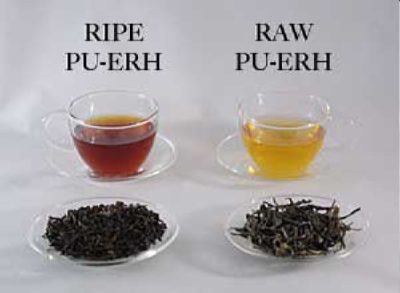
The color of the brewed tea is a dead giveaway. A young Sheng Puerh will produce a bright, clear, yellowish-golden liquor color. A Shu Puerh, due to its accelerated fermentation, will produce a very dark, inky, reddish-brown liquor, similar to black coffee.
Wet Leaves: Resilient, Olive-Green Leaves (Sheng) vs. Dark, Soft, Decomposed Leaves (Shu)
After brewing, examine the wet leaves (Ye Di). Sheng Puerh leaves will be whole, resilient, and a vibrant olive-green. Shu Puerh leaves will be very dark brown or black, and will be much softer and more delicate, as the intense fermentation has broken them down.
The Journey of Aging: Two Different Paths
Both teas are designed for aging, but they evolve in very different ways.
Aging Sheng: A Dramatic Transformation Over Decades
Sheng Puerh undergoes a dramatic change over time. Over 10, 20, or 30 years, its initial sharpness and astringency will completely disappear, transforming into a smooth, thick, and deeply complex brew with a profound aged character.
Aging Shu: A Process of Refinement and Mellowing
Shu Puerh does not transform as dramatically, as it is already “aged.” However, it does refine. Over the first few years, any initial “wet pile” aroma from the fermentation process will dissipate, and the flavors will become cleaner, sweeter, and more integrated.
Which Puerh is Right for You? A Beginner’s Guide
So, which Puerh is better for beginners? The answer depends on your taste preference.
Choose Shu Puerh If You Are New to Puerh or Love Smooth, Earthy Flavors.
Shu Puerh is often recommended as the starting point. Its smooth, comforting, and non-bitter character is very accessible and easy to enjoy immediately. It’s the perfect introduction to the Puerh “flavor-world.”
Choose Sheng Puerh If You Enjoy Vibrant, Complex Flavors and are Interested in Aging Tea.
If you enjoy the complexity of green teas or are fascinated by the idea of aging tea yourself, Sheng Puerh is your path. Its vibrant character and incredible aging potential offer a lifetime of exploration.
Two Distinct Worlds in One Family
In the Sheng vs. Shu Puerh debate, there is no winner. They are not in competition. They are two distinct, equally valid expressions of the same raw material—two fascinating worlds within the single, wonderful family of Puerh tea. The only way to know which you prefer is to try both.
The best way to understand the difference is to taste it. Are you ready to explore these two fascinating worlds of Puerh? .
FAQ: Your Sheng and Shu Puerh Questions Answered
Is Sheng or Shu Puerh healthier?
Both are considered healthy. Sheng Puerh, being closer to a green tea, is very high in antioxidants. Shu Puerh, due to its fermentation, is traditionally used in Chinese culture to aid digestion and is known for its gut-friendly properties.
Can Sheng Puerh upset your stomach?
A very young, strong Sheng Puerh can be quite potent and may be intense for some people on an empty stomach. If you have a sensitive stomach, it’s best to enjoy Sheng Puerh after a meal, or to start with a Shu Puerh, which is known for being very gentle.
Do you brew them differently?
Yes, slightly. Both benefit from a rinse and boiling water. However, a young Sheng Puerh often requires very quick infusions to manage its intensity and bitterness. A Shu Puerh is much more forgiving and can be steeped for slightly longer times.
Where can I buy both authentic Sheng and Shu Puerh?
It is essential to buy from a specialized vendor who clearly labels their products and provides information on their origin and age. At , we offer a curated selection of both high-quality Raw vs. Ripe Puerh