


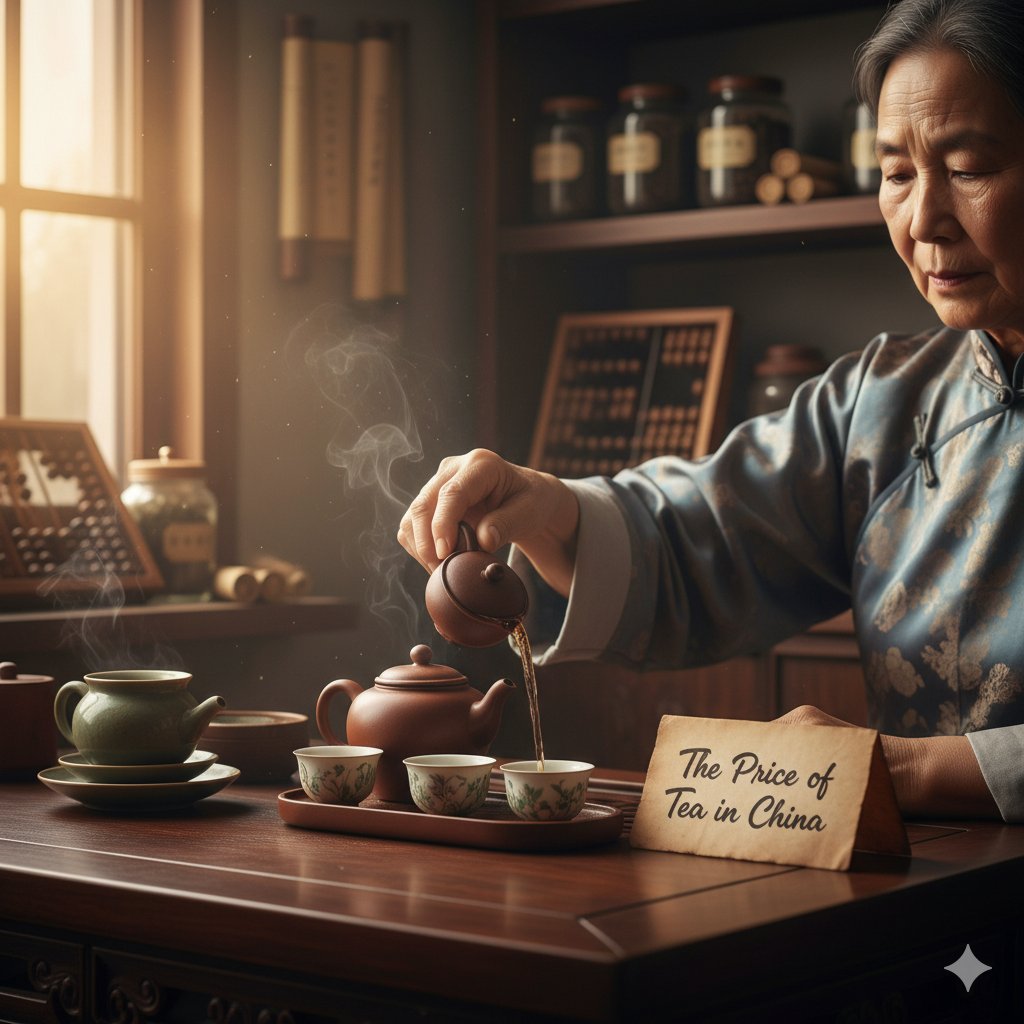
The Price of Tea in China: An In-Depth Guide to the Idiom & the Reality
The phrase “the price of tea in China” resonates deeply in the English-speaking world. It’s a curious expression, used in contexts that often have nothing to do with tea at all. But what is the price of tea in China? This question has two profound answers. The first lies in the dramatic history of global trade that gave birth to a famous idiom. The second is a journey into the complex, fascinating reality of the modern Chinese tea market. This in-depth guide will explore both.
What is the “Price of Tea in China”? Deconstructing a Famous Phrase and a Complex Market
To truly understand this famous phrase, we must deconstruct it. On one hand, it’s a linguistic fossil, a relic of a time when tea was a global obsession that shaped empires. On the other hand, it’s a very real, practical question for anyone interested in Chinese tea culture. Answering it requires us to unpack the meaning of a famous saying while also exploring a market where a pound of tea can cost anywhere from a few dollars to the price of a luxury car. This is your guide to the idiom and the reality.
The Idiom: Deconstructing “Not for All the Tea in China”
Let’s begin with the famous saying. When someone says they “wouldn’t do it for all the tea in China,” what do they really mean?
What the Saying Means: A Symbol of Immeasurable Value
The idiom “not for all the tea in China” is a classic example of hyperbole. It is used to express that something is impossible, or that one’s principles are so strong they cannot be bought at any price. The core price of tea in china meaning in this context is that “all the tea in China” represents a thing of immeasurable, almost infinite, value. To refuse it is to make the ultimate statement of conviction.
Historical Roots: The Opium Wars and the British Thirst for Tea
To understand why the phrase holds such power, we must go back to the 18th and 19th centuries. The British Empire developed an insatiable thirst for Chinese tea. It became a national obsession, a cornerstone of their culture. However, China, being the world’s sole producer, held a monopoly. The British had a massive trade deficit, as they had little that the self-sufficient Chinese empire wanted in return.
Why Tea Was Once as Valuable as Silver
The British were forced to pay for their tea addiction with silver, leading to a massive outflow of the nation’s wealth. This desperate situation was a key factor that led the British to begin illegally trading opium in China, a catastrophic decision that eventually sparked the Opium Wars. In this era, the total value of the tea trade was colossal, making “all the tea in China” a fitting metaphor for a vast fortune. The history of the tea trade is deeply intertwined with this phrase. This also explains why was tea important to china’s economy and global politics.
How the Idiom is Used in Modern Language
Today, the phrase is used far from the docks of Canton. A politician might say they “wouldn’t raise taxes for all the tea in China,” or a friend might say they “wouldn’t sell their vintage car for all the tea in China.” It has become a universal symbol for something that is simply not for sale, a principle that cannot be compromised, rooted in a time when tea was one of the world’s most valuable commodities.
The Reality: What is the Actual Price of Tea in China Today?
Now, let’s answer the literal question. The actual cost of tea in China varies more dramatically than almost any other agricultural product. The market can be broken down into three distinct tiers.
Tier 1: The Daily Drinkers (超市茶) – A Few Dollars a Pound
This is the tea that the vast majority of people drink every day. It’s machine-harvested, machine-processed, and sold in supermarkets. It’s often made from summer or autumn leaves from large, flat tea plantations. The quality is basic, the flavor is simple, and the price is very low, often just a few US dollars for a 500g bag.
Tier 2: The Enthusiast’s Choice (名优茶) – The 50−50−300 Range
This is the world of “famous, high-quality teas,” and it’s where most serious tea lovers, and stores like Wings Tea Shop, operate. These teas come from specific, well-regarded regions, are often hand-picked in the spring, and are processed by skilled artisans. A premium chinese tea in this range, like a good Wuyi Rock Oolong or a decent Sheng Puerh, might cost anywhere from $50 to $300 for a 100-200g package.
Tier 3: The Collector’s Prize (古树茶/大师茶) – From Hundreds to Thousands
This is the peak of the market. These are teas made from ancient, wild trees (gu shu), from legendary micro-lots (like the core pits of Wuyi), or by celebrated tea masters. These teas are extremely rare, and their prices are driven by scarcity and collector demand. A single Puerh cake or a small amount of “Master” made rock oolong can easily cost hundreds, thousands, or even tens of thousands of dollars.
A Look at Average Market Prices for Green, Oolong, and Puerh Tea
As a very rough guide for enthusiast-grade (Tier 2) tea, you might expect to pay:
- Green Tea: $30 – $100 for 100g
- Oolong Tea: $40 – $200 for 100g
- Puerh Tea: $50 – $300+ for a 357g cake
The Anatomy of Price: What Makes Premium Chinese Tea So Expensive?
Why is tea so expensive in China, especially at the high end? The price is determined by a combination of four key factors.
Factor 1: Terroir – The Real Estate of Tea
Terroir is the unique environment where the tea is grown. In the world of high-end tea, some mountains and villages are like the Beverly Hills of the tea world. Their unique soil, climate, and elevation produce a flavor that cannot be replicated anywhere else.
Case Study: Why Banzhang Puerh is the “Beverly Hills” of Tea Mountains
The Puerh from Banzhang village in Yunnan is famous for its powerful Cha Qi and intense flavor. The demand for tea from this small, specific area is so high that the raw leaves alone can cost thousands of dollars per kilogram, making any tea produced from them inherently expensive.
Factor 2: Rarity and Age – The Time Value
The laws of supply and demand are at play. Rarity, whether from an old, low-yielding tree or a specific historical vintage, dramatically increases the price.
Case Study: The Exponential Value of an Aged Puerh Cake
A Sheng Puerh cake that was purchased for $50 in the early 2000s, if stored correctly, could be worth over $1,000 today. The time and care invested in its aging, plus its increasing scarcity as others are consumed, adds tremendous value.
Factor 3: Craftsmanship – The Master’s Hand
The skill of the tea master is a huge factor. A truly handmade tea, where every step from withering to roasting is done by a master artisan, requires immense labor, time, and generational knowledge.
Why a Handmade Tea Costs More Than a Machine-Made One
A tea master can make tiny adjustments based on the day’s weather and the specific quality of the leaves—something a machine can’t do. This level of craftsmanship creates a more complex and flawless tea, and this skill commands a premium price.
Factor 4: Hype and Market Demand
Finally, modern marketing and speculation play a role. A tea that wins a famous competition or becomes a trending topic among wealthy collectors can see its price skyrocket, sometimes beyond its intrinsic quality.
The Role of Competitions and Modern Marketing
Tea competitions (Dou Cha) in China can create stars. A farmer who wins the title of “Tea King” for their Rou Gui oolong will be able to sell that batch for an astronomical price.
Conclusion: The Enduring Value of Tea
So, what is the price of tea in China? It is both a fascinating piece of linguistic history and a complex economic reality. The idiom reminds us of a time when tea’s value was almost mythical, a treasure worth fighting wars over. The reality of today’s market shows us that, for the finest teas, this is still true. The true value comes not from a price tag, but from the unique terroir, the patient aging, the master’s skill, and the rich culture that are all concentrated in your cup.
The true value of a great tea is not its price, but the story and experience it offers. Discover teas of exceptional value in every price range at Wings Tea Shop.
FAQ: Your Chinese Tea Price Questions Answered
Why is the idiom about China, and not India or another country?
The idiom originated in the 19th century. At that time, China was the world’s exclusive, monopolistic producer of tea. The entire global supply came from there, making “all the tea in China” the ultimate symbol of global supply and immense value.
Can I buy good, affordable tea from China?
Absolutely. There is a huge world of delicious, high-quality “daily drinker” teas in the Tier 2 range. You do not need to spend hundreds of dollars to enjoy an authentic and wonderful tea experience. The key is to buy from a source that values quality at every price point.
What is the most expensive tea in China?
The most expensive teas are typically very rare, aged Puerhs or small-batch Wuyi Rock Oolongs from a legendary location, like Da Hong Pao from the original mother bushes. These are essentially collector’s items, and their prices can reach hundreds of thousands of dollars for a small amount.
How can I be sure I’m paying a fair price for premium tea?
The best way is to buy from a transparent and trustworthy vendor. A good seller will provide clear information about the tea’s origin, cultivar, and harvest year. At Wings Tea Shop, we believe in explaining the value behind the price, so you can be confident in your purchase.