

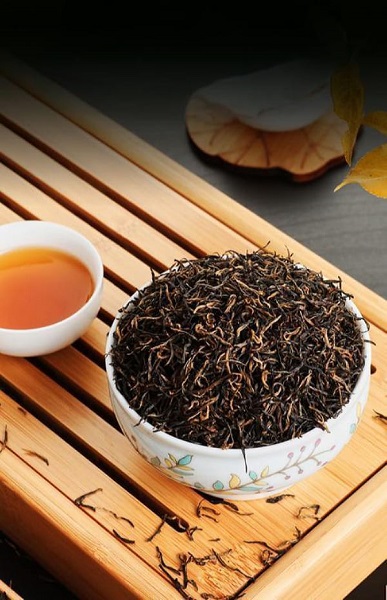
Not all black teas are created equal. While many are known for their bold, malty strength, there is a category of black tea prized for its profound and elegant aroma. At the very pinnacle of this category is Qimen Hongcha. More famously known in the West as Keemun Black Tea, this is a legendary tea celebrated for its complex fragrance and smooth, refined character.
Discover Qimen Hongcha: The Elegant “Gentleman” of Black Teas
If Dianhong is the warm and robust heart of Chinese black tea, then Qimen Hongcha is its sophisticated, well-dressed soul. What is Qimen Hongcha? It is often called the “gentleman” of black teas for its balanced, non-aggressive nature and its captivating, perfume-like aroma. This guide will introduce you to its history, its unique fragrance, and how to best enjoy this exceptional tea.
The History of a Queen’s Favorite: The Origins of Keemun
The qimen black tea history is fascinating. Unlike many famous Chinese teas with ancient roots, Keemun is a relative newcomer.
A Young Legend from Anhui Province
Keemun was first produced in Qimen County, Anhui Province, in the late 19th century. A former civil servant learned black tea production techniques in Fujian and adapted them to the local tea cultivars in his hometown. The result was a spectacular success, creating a black tea with a unique aromatic profile that quickly gained international fame.

One of the World’s Three Great Fragrant Black Teas
Within a few short years, Keemun Black Tea became a sensation in England, reportedly a favorite of the Queen. It quickly established itself alongside Darjeeling from India and Uva from Ceylon (Sri Lanka) as one of the world’s three great high-fragrance black teas.
The Soul of the Tea: What is the “Qimen Aroma”?
The heart of Keemun’s identity is its unique and complex fragrance, known as the Qimen Aroma (Qi Men Xiang). What does Keemun tea taste like?
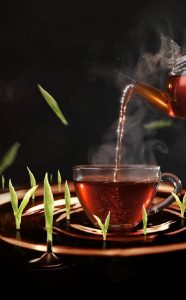
Qimen Hongcha – Qimen Aroma
A Natural Symphony of Flower, Fruit, and Honey
The Qimen Aroma is not a single note, but a beautiful and complex symphony. It contains elements of floral sweetness, ripe fruit, and a hint of honey. It is often described as being perfume-like, but in a completely natural and integrated way.
Often Described with Notes of Orchid, Rose, and Dried Plum
When trying to pinpoint the specific scents, connoisseurs often identify notes of orchid and rose. There is also a characteristic fruity note, similar to a dried plum or a slight smokiness like pine, which adds to its complexity. This unique combination of scents is what makes Keemun so special.
From Mao Feng to Golden Needle: Understanding Keemun Grades
Like all fine teas, Keemun is sorted into various grades. Understanding these keemun grades helps you know what to look for.
Hao Ya: The Bud-Rich Grades
The highest grades of Keemun are known as Hao Ya, meaning they are rich in the downy buds of the tea plant. These grades produce a more delicate, sweeter, and more intensely aromatic brew.
Qimen Golden Needle (Jin Zhen): The Pinnacle of Quality
The absolute top grade is Qimen Golden Needle (Qimen Jin Zhen). This exceptional tea is made almost entirely from the small, beautiful spring buds. It has the most concentrated and refined Qimen aroma and an incredibly smooth, sweet taste. It is the connoisseur’s choice.
How to Brew Qimen Hongcha to Emphasize Its Aroma
To fully appreciate this fragrant tea, your brewing should be focused on capturing its beautiful scent.
Use a Porcelain Gaiwan or Teapot
A neutral vessel like porcelain is ideal. It will not absorb any of the delicate aromas, allowing the tea’s full fragrance profile to be expressed purely.
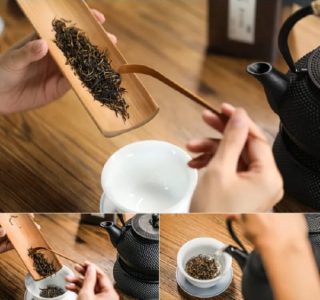
Water Temperature Just Below Boiling (90-95°C)
While it is a black tea, using water that is just slightly off the boil helps to protect its delicate aromatic oils. A temperature of 90-95°C (195-205°F) is perfect for balancing a full-bodied extraction with the preservation of its fragrant notes.
Focus on Smelling the Lid and the Empty Cup
Make it a part of your ritual. After you pour each infusion, take a moment to smell the inside of your Gaiwan lid. After you finish drinking a cup, smell the empty, still-warm cup. This is where you will find the most beautiful and concentrated Qimen Aroma.
An Experience of Unmatched Elegance
Qimen Hongcha is a tea that rewards a quiet moment and a focused palate. It is a masterclass in elegance, balance, and aromatic complexity. It proves that black tea can be as nuanced and refined as a fine wine or perfume. To drink Keemun is to experience the sophisticated, gentle power of a true gentleman.
If you believe black tea can be as nuanced and aromatic as a fine perfume, Qimen Hongcha is waiting for you. .
FAQ: Your Keemun Black Tea Questions Answered
How is Keemun different from Dianhong black tea?
The main difference is in their character. Dianhong is known for its bold, rich, and malty flavor with a very full body. Keemun is more delicate, lighter in body, and is primarily celebrated for its complex, floral, and fruity aroma. This is the classic Keemun vs Dianhong distinction.
Is Keemun a good tea for making milk tea?
Generally, no. A high-quality Keemun is prized for its delicate aroma, which would be completely lost if you add milk and sugar. It is a tea that is truly meant to be enjoyed on its own.
Does Keemun tea have a strong taste?
No, its taste is not considered strong in the way that an Assam or even a Dianhong is. Its strength lies in its aroma. The taste itself is smooth, mellow, and refined, with no bitterness or heavy astringency.
Where can I buy high-quality, authentic Qimen Hongcha?
To buy Keemun, you must find a specialized vendor who sources from the traditional production area of Qimen County in Anhui. At , we offer authentic Qimen Hongcha, including the exceptional Qimen Golden Needle