


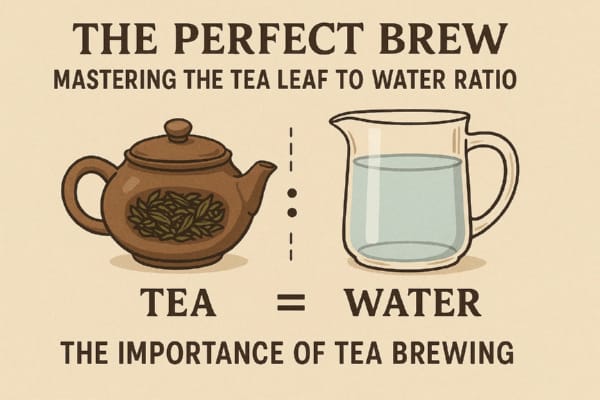
You’ve got the perfect tea and the right water temperature, but your brew is still inconsistent—sometimes too strong, sometimes too weak. The missing piece of the puzzle is likely the tea to water ratio. Mastering this crucial element is a key step in any gongfu brewing guide. This guide will explain the principles of Gongfu ratios and teach you how much tea to use for a perfect, consistent cup every time.
The Perfect Brew: Mastering the Tea Leaf to Water Ratio
Controlling the amount of leaf relative to the amount of water is perhaps the most powerful tool a brewer has. The correct tea to water ratio is the foundation for a balanced extraction, ensuring you get a full-flavored brew without excessive bitterness or weakness. While it may seem technical, understanding a few simple principles will give you incredible control over your tea brewing.
Why the Gongfu Ratio is Different
How much tea should I use for Gongfu? The first thing to notice is that the Gongfu method uses a much higher ratio of tea to water than typical Western-style brewing.
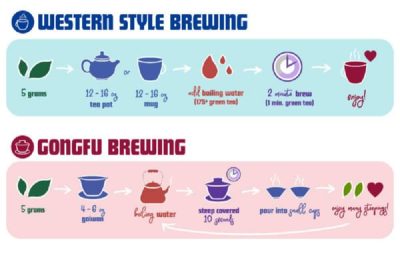
Gongfu vs. Western Style Brewing: A Quick Comparison
-
Western Style: Typically uses a low ratio, like 2-3 grams of tea for a large 8 oz (240ml) mug. The goal is one single, complete extraction.
-
Gongfu Style: Uses a high ratio, like 5-8 grams of tea for a small 100ml vessel. The goal is not one extraction, but many.
The Goal: Concentrated Flavor for Multiple Infusions
The high Gongfu ratio creates a concentrated infusion that is designed to be steeped for very short periods. This allows you to taste the tea’s flavor as it evolves over many successive infusions. You are essentially deconstructing the tea’s total flavor into 8-15 small, delicious chapters.
A General Starting Point: The 1:15 Ratio
While different teas need different parameters, a fantastic all-purpose starting point for Gongfu brewing is a 1:15 ratio.
For Example: 7 Grams of Tea for a 100ml Gaiwan
This ratio means 1 gram of tea leaf for every 15 milliliters of water. So, for a standard 100ml Gaiwan, you would use approximately 7 grams of tea. This is a robust and widely used starting point for many tea brewing ratios.
Why This is a Flexible Rule, Not a Strict Law
Think of the 1:15 ratio as your home base. It’s a reliable place to start, but you should always feel free to adjust based on the specific tea and your personal taste. It’s one of the most important brewing tips to remember.
Adjusting the Ratio by Tea Type
Because different teas have different densities and shapes, you’ll need to adjust the ratio.
For Fluffy, Unrolled Teas (White Tea, Taiping Houkui): Use More Volume
Large, fluffy leaves like White Peony or Taiping Houkui take up a lot of space. While their weight might be low, you’ll need to use enough leaf to generously fill about half to two-thirds of your brewing vessel.
For Tightly Rolled Oolongs: A Little Goes a Long Way
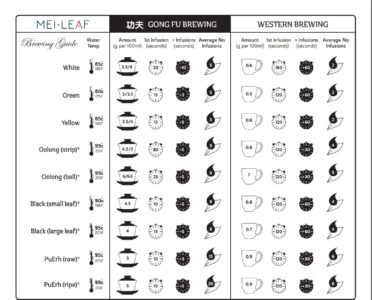
Tightly rolled oolongs, like Tie Guan Yin, expand dramatically in water. For these, you need to use much less leaf by volume. Covering just the bottom of your gaiwan is often enough. The standard oolong tea ratio by weight (e.g., 7g per 100ml) is a good guide here.
For Compressed Puerh Teas: Start with a Smaller Chunk
A chunk of compressed Puerh will also expand as it breaks apart. It’s better to start with a slightly smaller amount than you think you need. You can always add a little more if the brew is too weak, but you can’t take it out if it’s too strong.
How to Measure Tea Leaves Without a Scale
How do I measure tea without a scale? While a small gram scale is a great investment, you can absolutely use your eyes.
Using Volume as a Guide: Covering the Bottom of Your Vessel
The most common traditional method is to use volume. The goal is to add enough dry leaf to cover the bottom of your Gaiwan or teapot. This simple visual cue works surprisingly well for a wide range of teas.
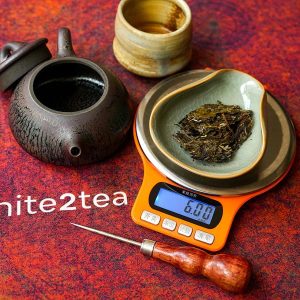
A Visual Guide for Different Tea Shapes
-
Ball-Rolled Oolongs: A single, dense layer covering the bottom.
-
Strip-Style Oolongs/Black Teas: A fluffy layer covering about 1/4 to 1/3 of the vessel’s volume.
-
Fluffy White/Green Teas: A very generous layer filling 1/2 to 2/3 of the vessel’s volume.
Conclusion: Your Key to Consistency and Control
Mastering the tea to water ratio is your key to achieving a consistent, delicious brew every time. It’s what separates haphazard guessing from intentional, controlled brewing. Start with the 1:15 rule, pay attention to the shape of your leaves, and don’t be afraid to experiment. This single skill will give you more control over the final taste of your tea than any other.
The best way to find your perfect ratio is to experiment. Start with our guidelines and adjust to your taste. .
FAQ: Your Tea Ratio Questions Answered
What happens if I use too much or too little tea?
What happens if I use too much tea? Your brew will be very strong, and you’ll need to use extremely short infusion times to avoid bitterness. If you use too little tea, the brew will be weak and watery, and you’ll need to use very long infusion times to extract enough flavor.
Does the ratio change for later infusions?
No, the ratio of leaf to water is set at the beginning and remains the same. What changes is the infusion time. For later infusions, you will gradually increase the steeping time to continue extracting flavor from the leaves.
Should I use more tea if I want a stronger flavor?
Not necessarily. The best way to get a stronger flavor in Gongfu brewing is to increase the infusion time slightly, not the amount of tea. Using too much tea can easily lead to a bitter, unbalanced brew.
What are the standard grams of tea per 100ml for oolong?
A very common starting point for most oolong teas is between 6 and 8 grams of tea per 100ml of water. For a standard 100-120ml Gaiwan, this means a single 7g serving is perfect.