

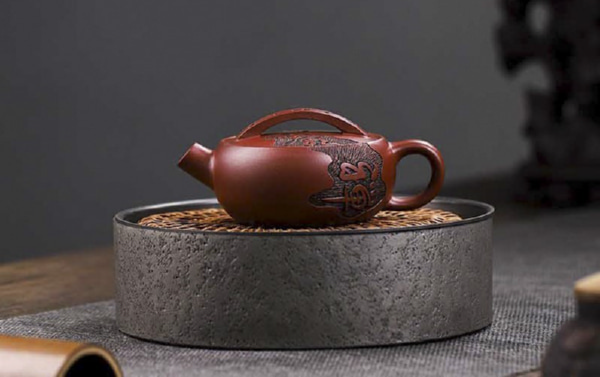
Dragon Blood Zen Yixing is a masterpiece of the latter category. Its name alone speaks of a union between a rare, powerful material and a profound, tranquil philosophy. This is a guide to the artistry and meaning behind this exceptional piece of yixing teapot art.
More Than a Teapot: The Artistry of the Dragon Blood Zen Yixing
When you hold the Dragon Blood Zen teapot, you are holding more than a tool. You are holding a piece of sculpture, an object of meditation. Its value lies not only in its function as a high-quality zisha teapot, but in its material, its form, and the quiet story it tells. Let’s deconstruct the elements that make this artisan zisha teapot so special.
The Clay: What is “Dragon Blood Sand” (Long Xue Sha)?
The journey of this pot begins with its legendary clay. What is Dragon Blood clay?
A Rare, Iron-Rich Zisha Clay
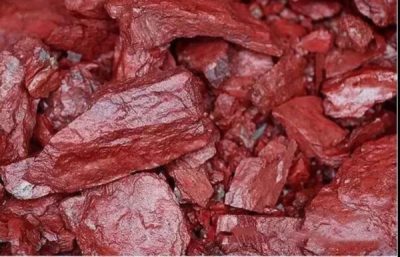
Long Xue Sha (龙血砂), or Dragon Blood Sand, is a highly sought-after and rare type of Zisha yixing clay. It is a specific sub-type of Zhu Ni (red clay), known for its exceptionally high iron oxide content. This gives the raw clay its characteristic deep red hue.
The Deep, Lustrous Red-Brown Color After Firing
When fired at high temperatures, the iron in the clay transforms, creating a deep, rich, and slightly purplish red-brown color. The surface is not glossy but has a deep, innate luster that seems to glow from within. This unique color is what gives it the evocative name “Dragon Blood.”
How It Affects the Tea’s Flavor and Texture
Due to its high density and iron content, Dragon Blood Yixing teapots are known for their excellent heat retention. They are particularly good at rounding out the sharper edges of a tea, softening astringency and creating a smoother, fuller-bodied brew.
The Design: The Philosophy of a “Zen” Teapot
The second half of the teapot’s name is “Zen.” The design of this pot is a masterclass in minimalist aesthetics and zen style teapot philosophy.
Simplicity of Form, Focus on Material
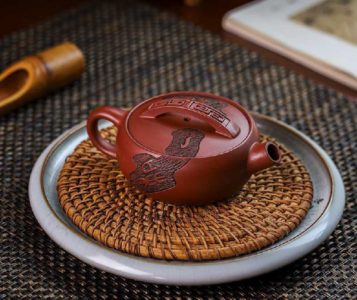
The shape of the Dragon Blood Zen pot is intentionally simple and unadorned. There are no intricate carvings or decorations. This minimalist approach serves a purpose: it removes all distractions and forces the viewer to focus on the pure beauty of the form and the rich, complex color of the Dragon Blood clay itself.
The Concept of “Liu Bai” (Leaving White Space)
The design embodies the artistic concept of Liu Bai (留白), or “leaving white.” By keeping the form clean and the surfaces empty, the artist creates a sense of space and tranquility. It is an invitation for the mind to be still.
Creating a Sense of Calm and Stillness
The overall effect of this yixing teapot design is one of calm, balance, and profound stillness. Its simple, powerful form is grounding, making it the perfect centerpiece for a mindful and meditative tea session.
The Craftsmanship: Hallmarks of an Artisan Zisha Teapot
Beyond the material and design, its quality is evident in the masterful craftsmanship.
The Flow of the Spout
A key mark of a master artisan is the pour. The spout is perfectly aligned, delivering a smooth, clean, and unbroken stream of water without any drips.
The Balance and Feel in Hand
When you pick up the teapot (even when empty), it should feel perfectly balanced. The handle should be comfortable, and the weight should feel substantial and centered.
The Precision of the Lid
The lid is crafted with extreme precision. It should fit snugly into the opening with minimal wobble, creating a near-perfect seal that is essential for trapping heat and aroma.
How to Use This Teapot: A Ritual of Mindfulness
A teapot with such a clear philosophical intent invites a certain kind of use.
Pairing it with Meditative Teas like Sheng Puerh
The pot’s ability to soften and deepen a brew makes it an ideal partner for teas that are themselves complex and contemplative, such as an aged Sheng Puerh or a robust Wuyi Rock Oolong.
Focusing on the Simple, Deliberate Movements of Brewing
Using this pot is an invitation to slow down. Focus on the simple, deliberate movements of adding leaves, pouring water, and serving the tea. Let the pot’s quiet presence guide you into a state of mindfulness.
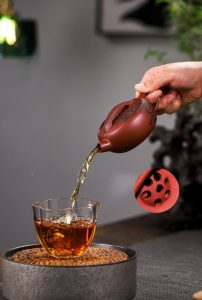
An Object for Contemplation
The Dragon Blood Zen Yixing is a perfect example of yixing teapot art. It is a masterful fusion of rare material, profound philosophy, and exquisite craftsmanship. It serves its primary function of brewing exceptional tea, but its greater purpose is to serve as an object for contemplation—a beautiful, silent reminder to find stillness and simplicity in our busy lives.
A teapot like the Dragon Blood Zen is an invitation to find stillness in your daily ritual. It is a piece of art that serves both the tea and the soul. .
FAQ: Your Artisan Yixing Questions Answered
What is the difference between “Dragon Blood” and regular Zini (purple clay)?
What is the difference between Dragon Blood and Zini clay? Dragon Blood Sand is a specific type of high-iron red clay (Zhu Ni), while Zini is purple clay. They fire to different colors—Dragon Blood to a deep red-brown, and Zini to various shades of purple-brown. Dragon Blood is also generally considered denser and rarer.
Is a teapot like this meant for daily use or for display?
It is designed for both. Its high-quality craftsmanship means it is a superb daily brewing tool that will only improve with use as it develops a patina. Its artistic and philosophical value also makes it a beautiful object to display and appreciate.
How do I find out more about the artist who made the pot?
An authentic artisan zisha teapot will always have the artist’s seal stamped on the bottom, and sometimes under the lid and handle. You can often research these seals online to find more information about the artist and their work.
How should I care for an artistic teapot like this one?