


When you begin your journey into high-end Chinese tea, you first learn to distinguish flavors and aromas. But as you go deeper, you may encounter a more subtle and profound concept: Cha Qi (茶气). What is Cha Qi? Translated as “tea energy” or “tea life force,” it’s a concept that moves beyond taste and into the realm of physical sensation. This guide will help you understand this pinnacle of advanced tea tasting.
Feeling the “Cha Qi”: How to Experience Tea’s Subtle Energy
For many seasoned tea drinkers, the search for powerful Cha Qi is the ultimate goal. It is the sign of a truly great, “living” tea. But the concept can feel elusive and mysterious. How can I feel Cha Qi? It’s not a myth; it is a real, tangible experience. It simply requires a quiet mind, a sensitive body, and, most importantly, the right kind of tea. This guide will show you how.
What is Cha Qi, Exactly? Beyond Flavor and Aroma
Defining Cha Qi can be difficult because it is, by nature, an internal, subjective experience.
A Definition: The Vital Force of the Tea
Cha Qi can be defined as the perceivable energetic effect a tea has on the body and mind. It is the tea’s vital force, absorbed by you. This energy is believed to come from the tea tree itself, especially from old trees with deep root systems that draw complex nutrients from the earth.

It’s Not Just Caffeine: A Different Kind of Stimulation
It is very important to distinguish Cha Qi from a simple caffeine buzz. A caffeine rush can feel jittery and unfocused. Tea energy, on the other hand, is often described as a smooth, grounding, and clarifying sensation. It can be stimulating, but it is a focused, calm stimulation, not a frantic one.
The Physical Sensations: What Does Tea Energy Feel Like?
While subjective, there are common physical sensations associated with strong Cha Qi. What does Cha Qi feel like? Look for these signs in your own body during a tea session.
A Feeling of Warmth Spreading Through the Body
One of the most common signs is a pleasant feeling of warmth that spreads from your stomach or chest out to your limbs, back, and even the palms of your hands. It’s a gentle, deep-seated warmth.
A Sense of Deep Relaxation and Calmness
A powerful Cha Qi can induce a state of profound relaxation. You might feel your shoulders drop, your breathing slow down, and a sense of calm “settling” in your body. It is a deeply meditative state.

A Heightened Sense of Focus and Clarity
Contrary to what “relaxation” might imply, Cha Qi often brings a sharpened mental focus. The mind feels clear, bright, and alert. This is the “calm alertness” that monks have used for centuries to aid in long meditation sessions.
Sometimes, Even Light Perspiration or Tingling
For very powerful teas, the energetic effect can be quite strong. It’s not uncommon to experience light perspiration on your brow or back, or a tingling sensation in your hands or along your spine as the tea energy moves through you.
Which Teas Have the Strongest Cha Qi?
Not all teas possess strong Cha Qi. It is a rare quality found primarily in teas grown in specific conditions.
The Importance of Old Trees (Gu Shu)
The most significant factor is the age of the tea tree. Old trees, known as Gu Shu (古树), have deep, extensive root systems. They draw more complex minerals and energy from the soil, which is then expressed in the leaves. Teas made from young, plantation bushes rarely have noticeable Cha Qi.
The Role of a Clean, Biodiverse Environment (Sheng Tai)
A clean, natural, and biodiverse growing environment, or Sheng Tai (生态), is also crucial. Tea trees that grow in a wild or semi-wild state, surrounded by a rich ecosystem of other plants and insects, produce teas with more vitality and stronger Cha Qi.
Top Candidates: Aged Sheng Puerh and High-Quality Rock Oolongs
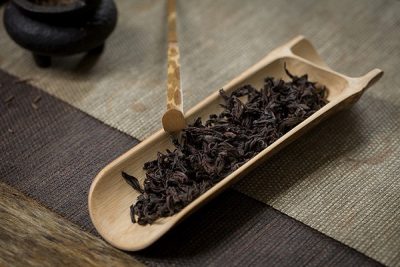
Based on the factors above, the teas most famous for having strong Cha Qi are old-growth Sheng (Raw) Puerh Tea from Yunnan and high-quality Rock Oolong from the Wuyi Mountains. These are the teas that connoisseurs seek for a profound tea experience.
How to Cultivate Your Sensitivity to Cha Qi
Feeling Cha Qi requires you to be receptive. Here are a few tips to increase your sensitivity.
Find a Quiet Time and Space
To notice a subtle energy, you need to minimize external distractions. Find a quiet time when you won’t be interrupted.
Brew with a Clear and Calm Mind
Approach your tea session with a calm and open mind. If you are stressed or distracted, it will be much harder to notice the subtle sensations in your body. Take a few deep breaths before you begin.
Drink on an Empty Stomach (with caution)
Many find that Cha Qi is most noticeable when drinking on an empty stomach. However, be cautious: very strong tea on an empty stomach can sometimes cause discomfort for sensitive individuals.
Pay Attention to Your Body, Not Just Your Mouth
This is the most important tip. Shift your focus from just analyzing the taste in your mouth to observing the sensations throughout your entire body. Notice the warmth, the tingling, the feeling of relaxation in your shoulders.
The Deepest Conversation with Your Tea
The pursuit of Cha Qi is what takes tea tasting from a simple sensory pleasure to a deep, holistic experience. It is the most profound conversation you can have with a tea, where the tea “speaks” directly to your body. It is a reminder that the finest teas are not just products; they are living things with a powerful, palpable energy.
The world of Cha Qi can only be understood through experience. Are you ready to listen to what the tea has to say? .
FAQ: Your Cha Qi Questions Answered
Is Cha Qi a real, scientific phenomenon?
While “energy” is a metaphysical term, the sensations are real. They are likely caused by a complex interplay of compounds in the tea (like caffeine, L-theanine, and various minerals) interacting with your unique physiology. While we can’t measure Cha Qi in a lab, we can certainly measure its effects on our bodies.
Can everyone feel Cha Qi?
Sensitivity varies from person to person. Some people are naturally more attuned to their body’s subtle sensations. However, with practice and by drinking the right teas, almost anyone can learn to cultivate their sensitivity and begin to feel it.
Does the way I brew the tea affect its Cha Qi?
Yes. A focused, mindful brewing session using the Gongfu method, which involves multiple infusions, is said to be the best way to fully extract and experience a tea’s Cha Qi, as it allows you to observe how the energy builds and changes over time.
Can a tea have good flavor but weak Cha Qi?
Absolutely. Many teas can be delicious, with beautiful aromas and sweet flavors, but have very little or no noticeable Cha Qi. This is often the case with teas from younger, plantation-style bushes. A tea with both exceptional flavor and